

Pushing the envelope of marketing means giving customers a unique experience. Instead of handing customers a flyer, brands have evolved to provide customers with memorable moments that leave them with a lasting impression of their brand. This is experiential marketing, one of the most effective ways to connect with customers and teach them about your brand and what you offer.
How can we measure the effectiveness of experiential marketing campaigns, and how do we analyze the ROI? Let’s dig deeper into this relatively new marketing method and explore how experiential marketing can help your company.

Key Principles of Experiential Marketing
When planning an experiential event, it’s essential to remember the three major principles of experiential marketing:
- Immersive experiences
- Emotional connections
- Consumer engagement
Let’s discuss more about these principles.
Immersive Experiences
Creating immersive experiences is a surefire way to capture the attention of any potential customer. Immersive experiences provide opportunities to appeal to all senses; this keeps the customer interested and more immersed in the brand. With experiential marketing, customers are part of the story, rather than being told a story.
Emotional Connections
Over the years, we’ve learned that to influence consumer decision-making, we must provide them with a solid emotional connection. Because our emotions often guide our choices more than rational thinking, giving an emotional connection frequently plays a significant role in changing a customer’s perception of a brand.
Consumer Engagement
After the emotional connection has been made, establishing a relationship between the customer and the brand begins. By cultivating this vital relationship, brands create excitement and loyalty among customers, which can be challenging. This is your chance to wow the customer. Treat them right, and they’ll be loyal in return.
Calculating ROI in Experiential Marketing
Experiential marketing often requires much more effort than other traditional methods. How do you know if it’s worth the extra time, effort, and money for your company? Calculating ROI for experience marketing can be a little tricky. Instead of simply taking the sales growth from the business, subtracting the marketing costs, and dividing by the marketing costs, you’ll need to look at several factors. Keeping track of metrics on social media engagement, measuring foot traffic at events, analyzing brand awareness, and tracking sales data are all ways to measure ROI in experiential marketing.

Essential Metrics for ROI Analysis
While tracking the success of an experiential campaign isn’t straightforward, keeping track of these specific metrics will allow you to learn more about your customers and create more effective campaign optimization. Because each event is unique and out-of-the-box, you’ll need to apply the right metrics for analysis. Here are some that are commonly used:
Attendance and Participation Rates
While planning an event, set a target goal for attendance. No one wants to plan an event to have mediocre attendance from potential customers. Attendance is a key performance indicator that tells how many people participate in an event. Placing a counter at the event’s entry will help you collect the number of attendees, as well as collect social media handles and email addresses. Collecting this data allows you to continue the conversation with the customer well after the event.
Lead Generation and Conversion Rates
Providing customers with a personalized experience not only gives your company a better understanding of their likes and dislikes but also makes it easier for them to match the demands of each individual. Providing consumers with personalized encounters results in more high-quality leads for your company, which equals higher conversion rates.
Customer Feedback and Sentiment Analysis
How do you know if your campaign was successful? Here’s your chance to hear from your customer base. Experiential marketing allows for more face-to-face contact, which, in turn, can give you better customer feedback. Utilizing sentiment analysis can help determine customer trends and feelings that you can use to influence digital marketing decisions. By keeping track of the customer’s attitudes toward your product, you can refine what you offer and provide better experiences in the future.
FAQs: Measuring Success and ROI for Experiential Marketing
What makes an experiential marketing campaign effective?
An experiential marketing campaign is most effective when it immerses people in the brand, creates an emotional connection, and encourages real engagement. In practice, that means designing an experience people can participate in so they remember the brand long after the event.
How do you measure the ROI of an experiential marketing campaign?
You measure experiential marketing ROI by looking beyond a simple “sales minus cost” equation and tracking multiple outcomes tied to your goals. Common ROI inputs include social media engagement, event foot traffic, brand awareness signals, and sales data before/during/after the activation.
What KPIs should I track to prove my experiential event worked?
Start with the KPIs that show reach, action, and impact: attendance/participation, lead generation/conversions, and customer feedback/sentiment. These metrics help you quantify performance and also identify what to optimize for the next activation.
High-signal KPIs to track:
- Attendance & participation rate (did you hit your target?)
- Leads & conversion rate (did the event create qualified next steps?)
- Feedback & sentiment (did perceptions improve?)
How can I track event attendance and participation accurately?
Set a target attendance goal, then measure attendance at the door and participation at key touchpoints inside the activation. A simple entry counter can capture total attendees, and you can also collect emails and social handles to extend the relationship after the event.
How do I measure brand perception and customer sentiment after an experiential event?
Measure sentiment by collecting direct customer feedback and analyzing how people talk about the experience online and in follow-ups. Sentiment analysis helps spot trends in attitudes toward your product so you can refine future events and messaging.
Easy ways to capture sentiment:
- On-site micro-surveys or quick interviews
- Post-event email/SMS survey to attendees
- Social listening for comments, mentions, and reactions
Case Studies: Successful Experiential Marketing Campaigns
We consider ourselves experiential marketing experts, and the numbers speak for themselves. Here are just a few of our successful campaigns.
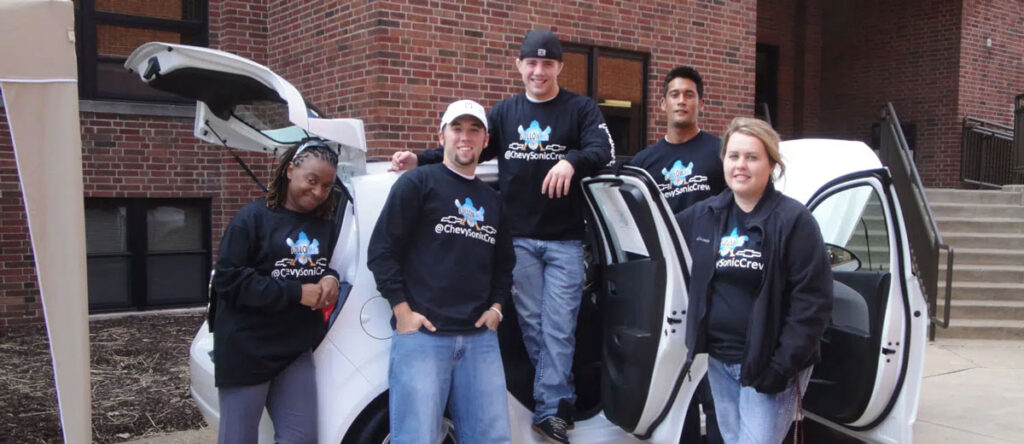
Chevrolet Street Teams
Our Chevrolet Street Team engages with customers by setting up Chevrolet branding in multiple markets nationwide, including music festivals and weekends at the zoo. We aim to support a Chevrolet dealer in a Designated Marketing Area, giving them brand activation days to educate customers on their vehicles. We perform 300 activation days yearly, have generated over 500,000 customer interactions, and delivered over 7,000,000 impressions across all markets.
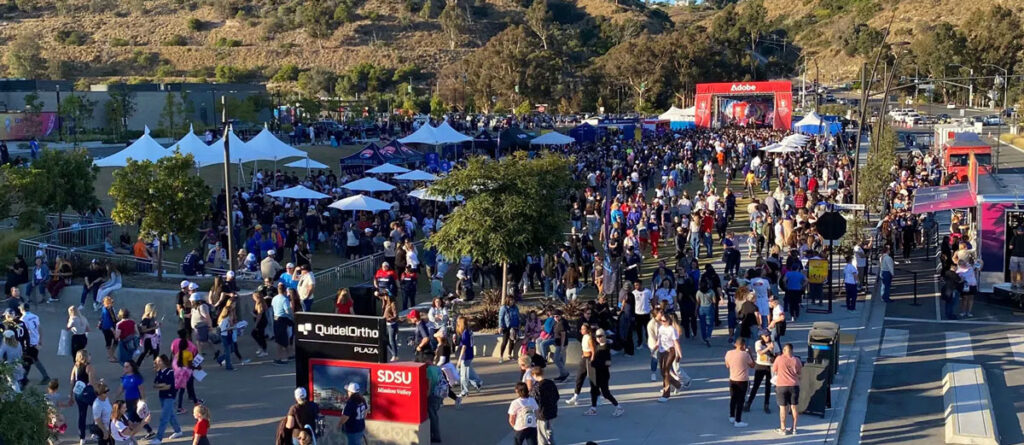
National Women’s Soccer League (NWSL) Championship Fan Fest
The National Women’s Soccer League (NWSL) hired Southport Marketing to organize a pre-game Fan Fest before the 2023 Championship Game at Snapdragon Stadium in San Diego. We also executed a CarMax skills challenge for customers to showcase their skills. The Fan Fest drew over 7,500 fans, and the skills challenge was featured on CBS during halftime of the Championship game.
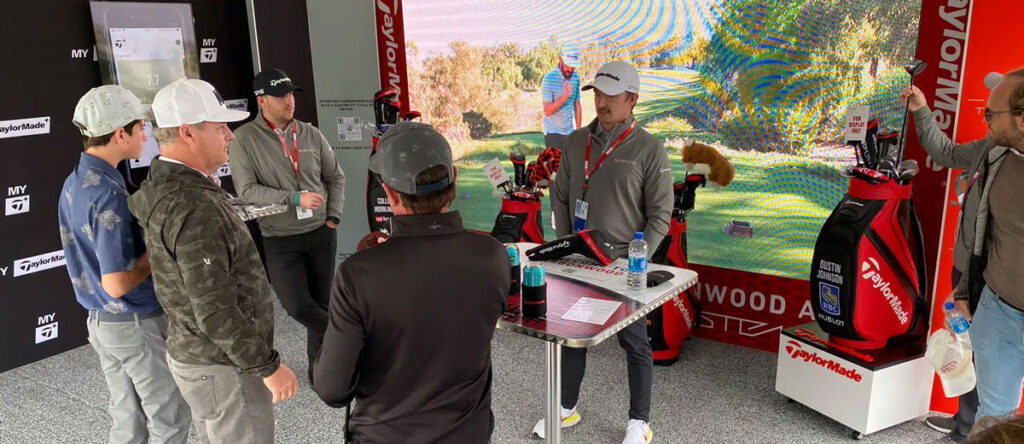
TaylorMade Golf Stealth Carbonwood Product Launch
Southport Marketing was the team that helped introduce the world to TaylorMade’s new Stealth Carbonwood driver, a composite material golf club that turned the golf market upside down. We produced product launch activations at two PGA Tour events, the Farmers Insurance Open and Genesis Invitational, to introduce these new and innovative golf clubs. We implemented a trial hitting bay driving range, an outdoor golf lounge, and a lounge for consumers to view the MyTaylorMade+ App. More than 4,000 consumers were engaged with the brand at the events, and more than 200,000 impressions were earned on social media.
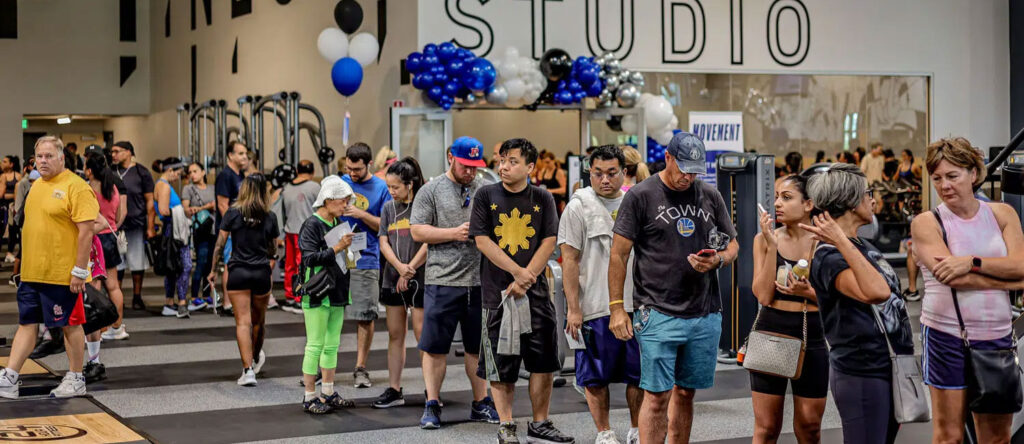
Take Your Experiential Event to the Next Level
When you need to take your business events to the next level, it’s time to hire Southport Marketing.
We have what it takes to effectively plan and analyze ROI on your next campaign. Instead of settling for less, we go above and beyond to deliver strategic, cost-effective solutions for our partners. With brand activation, event production, marketing fulfillment, sponsorship marketing, sports marketing, event technology, event staffing, design fabrication, VIP services, and large-scale printing all under one roof, we have the services you need to take your company to the next level. Get started today!